
Subsea Enclosures
GlobalTech Subsea provides customized, high-integrity subsea enclosures engineered to protect critical electronics, optical monitoring systems, power distribution networks, and control instrumentation in deepwater environments. Built to endure extreme hydrostatic pressure, marine corrosion, and thermal stresses, our subsea housings ensure continuous operational reliability across subsea oil and gas, ocean science, and offshore energy projects.
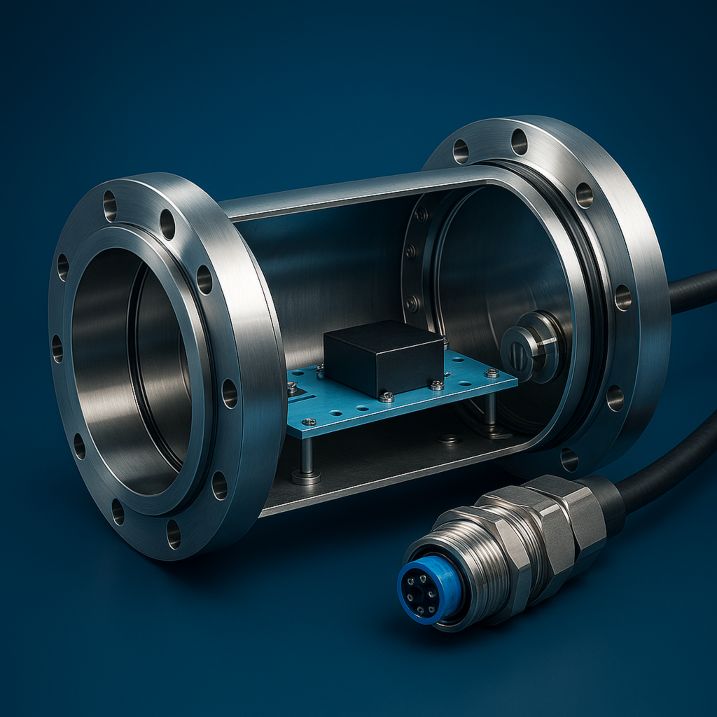
This image is for reference only
What is a Subsea Enclosure?
A Subsea Enclosure is a specialized pressure vessel or pressure-balanced housing designed to isolate sensitive electrical, optical, and mechanical components from raw seawater and hyperbaric ambient pressure. Deployed on the seafloor, these enclosures serve as protective housings for subsea control electronics, acoustic sensor arrays, battery power banks, and fiber optic splice nodes. Depending on internal component sensitivities, subsea enclosures are engineered either as 1-Atmosphere Pressure Vessels (maintaining surface air pressure internally) or as Pressure-Balanced Oil-Filled (PBOF) Housings (filling the interior with dielectric fluid to equalize internal and external pressures).
Frequently Asked Questions
What is the difference between a 1-Atmosphere Subsea Enclosure and a PBOF Housing?
A 1-Atmosphere Subsea Enclosure is a heavy-walled pressure vessel sealed at surface air pressure (1 atm), designed to isolate standard electronics and delicate optical instruments from external water pressure. A Pressure-Balanced Oil-Filled (PBOF) housing is filled with dielectric oil and uses a flexible compensator to balance internal pressure with surrounding hydrostatic seawater pressure, allowing thinner housing walls for pressure-tolerant components.
How do Subsea Enclosures handle internal thermal buildup from power electronics?
Heat generated by internal electronics is transferred to the outer metal shell using thermally conductive chassis mounts, internal heat sinks, or fluid convection currents (in oil-filled designs). The metallic shell then dissipates the thermal energy directly into the cold surrounding seawater.
What testing procedures ensure the integrity of a Subsea Enclosure before deployment?
Every subsea enclosure undergoes rigorous Factory Acceptance Testing (FAT), including hyperbaric pressure vessel testing beyond operating depths, non-destructive testing (NDT) on welds and seals, helium leak detection, and thermal cycling verification prior to field integration.
Engineered for Deepwater Precision & Severe Environment Protection
GlobalTech Subsea delivers custom-designed subsea enclosures built to safeguard your critical subsea equipment. From concept design and finite element analysis (FEA) to hyperbaric qualification and final assembly, our engineering team ensures your subsea payload performs flawlessly.
Need a custom enclosure design, specific material selection, or technical consultation for your project?
Why Choose GlobalTech Subsea?
Get in touch today to learn how GlobalTech Subsea can support your offshore operations with precision-engineered products and world-class service.